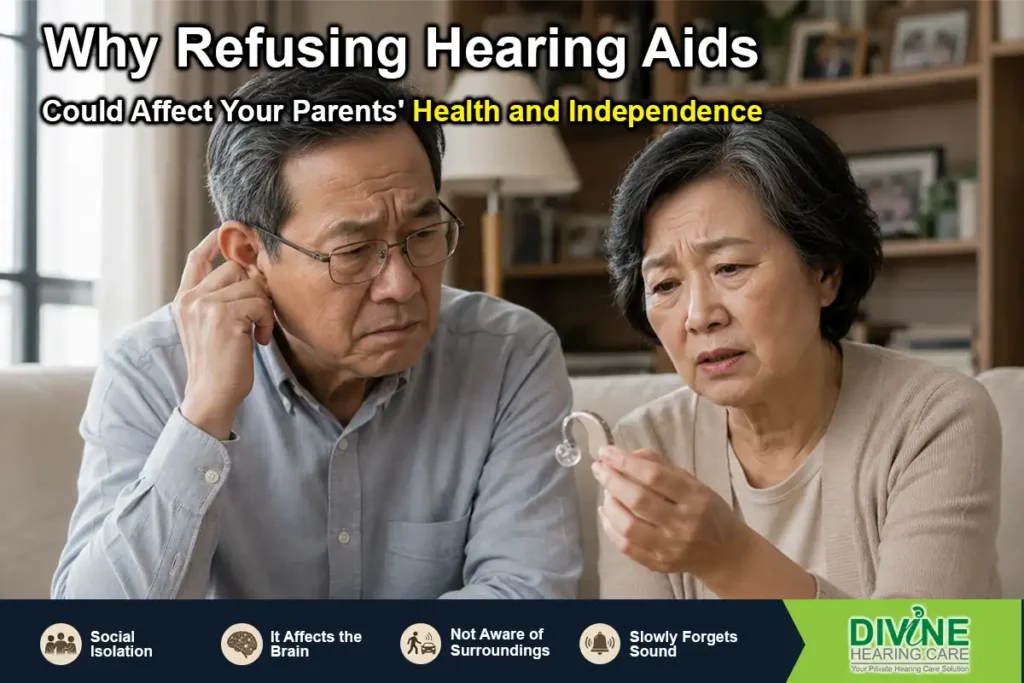
Why Refusing Hearing Aids Could Affect Your Parents’ Health and Independence
Many parents say the same thing.
“I can hear.”
“I don’t need hearing aids.”
“I’m just getting older.”
At first, it may seem harmless.
The TV volume gets a little louder.
They ask you to repeat yourself more often.
Family dinners become quieter—not because no one is talking, but because they can no longer follow the conversation.
Many families believe hearing loss is simply part of aging.
But untreated hearing loss is far more than an ear problem.
It can affect the brain, personal safety, emotional well-being, relationships, and even a person’s ability to live independently.
Hearing Loss Doesn’t Just Affect the Ears—It Affects the Brain
Many people don’t realize that hearing is actually a partnership between the ears and the brain.
Your ears collect sound.
Your brain interprets it.
When hearing loss develops, the brain receives less sound information.
Over time, the areas of the brain responsible for processing speech receive less stimulation and have to work much harder just to understand everyday conversations.
Research has shown that untreated hearing loss is associated with a higher risk of cognitive decline and dementia.
This does not mean hearing loss directly causes dementia.
However, studies consistently show that people with untreated hearing loss have a significantly higher risk of developing dementia compared with those who manage their hearing loss appropriately.
The earlier hearing loss is identified and managed, the better the opportunity to keep the brain actively engaged through communication.
The Brain Slowly Forgets How to Recognise Sounds
Hearing is not simply about making sounds louder.
It is about helping the brain recognise and understand what those sounds mean.
When hearing loss goes untreated for years, the brain gradually receives fewer clear sound signals.
Eventually, it becomes more difficult to:
- Recognise familiar voices
- Differentiate between similar words
- Follow conversations in restaurants
- Separate speech from background noise
- Understand grandchildren’s voices
Many people describe it like this:
“I can hear people talking… but I can’t understand what they’re are saying.”
This happens because the brain is losing access to clear sound information—not because people are mumbling.
The longer hearing loss is left untreated, the harder it may become for the brain to process speech effectively.
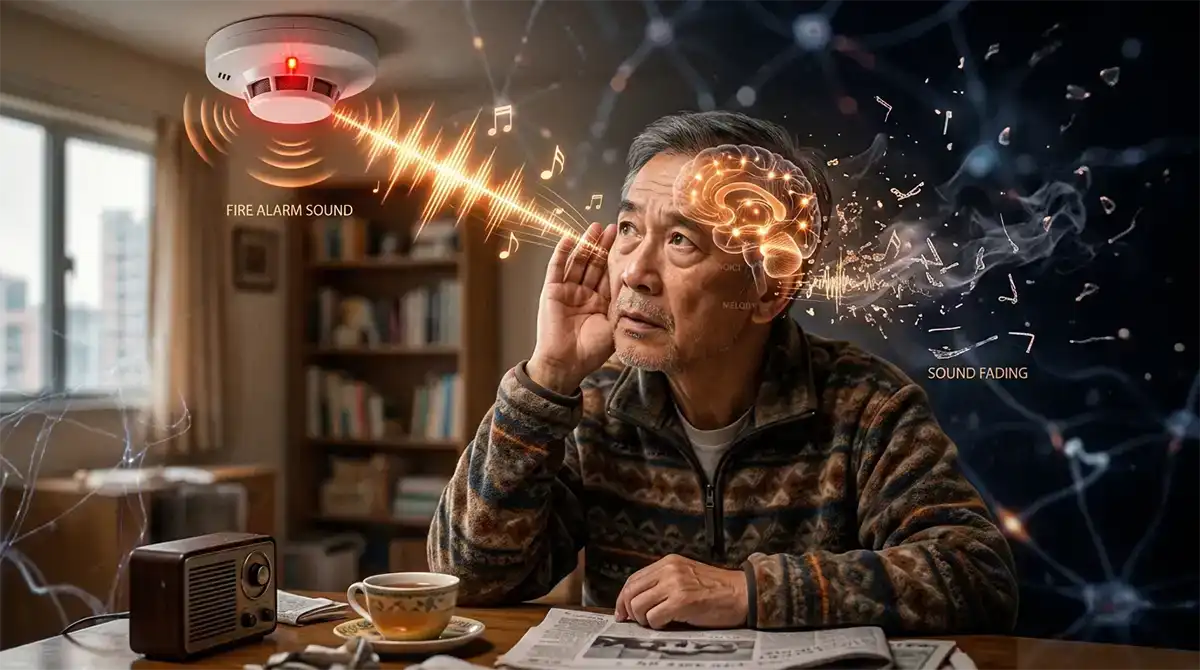
Hearing Loss Can Put Your Parents in Danger
Untreated hearing loss isn’t only frustrating.
It can also become a serious safety concern.
Your parents may not hear important warning sounds such as:
- Smoke alarms
- Fire alarms
- Carbon monoxide alarms
- Doorbells
- Someone calling for help
- Car horns
- Emergency vehicle sirens
- Motorcycles approaching from behind
- Bicycle bells
- Reversing vehicles
Missing these sounds could increase the risk of accidents both at home and outdoors.
Good hearing helps people stay aware of their surroundings.
Communication Slowly Disappears
Many families don’t notice hearing loss at first.
Instead, they notice changes like:
“Dad, why is the TV so loud?”
“Mum, I just told you.”
“You never listen.”
But often…
They simply didn’t hear.
Over time, conversations become shorter.
Family members stop repeating themselves.
Your parents may begin smiling and nodding instead of asking people to repeat what they missed.
Eventually…
They may stop joining conversations altogether.
Not because they don’t care.
Because it’s exhausting trying to keep up.

Hearing Loss Can Lead to Social Isolation
Restaurants become noisy.
Family gatherings become overwhelming.
Phone calls become stressful.
Many older adults slowly withdraw from social activities because they fear embarrassment or misunderstanding.
Unfortunately, loneliness and social isolation are themselves linked with poorer physical and mental health.
Hearing Aids Help Keep Your Parents Connected
Modern hearing aids do much more than simply amplify sound.
They help people:
- Hear conversations more clearly
- Reduce background noise
- Improve speech understanding
- Stay socially active
- Maintain confidence
- Support brain stimulation
- Remain independent longer
The earlier hearing loss is managed, the easier it is for both the ears and the brain to adapt.

Don’t Wait Until Conversations Become Memories
Many parents wait years before seeking help.
Some don’t realize how much hearing they’ve lost.
Others believe hearing aids are only for “old people.”
But hearing loss doesn’t improve by waiting.
Every missed conversation…
Every misunderstood word…
Every family gathering spent quietly sitting at the table…
Is a moment that can never be replaced.
Helping your parents hear better isn’t just about improving hearing.
It’s about protecting their independence, preserving precious relationships, and helping them continue enjoying the moments that matter most.
Scientific References
- The Lancet Commission on Dementia Prevention, Intervention and Care – Identifies hearing loss as one of the largest modifiable risk factors associated with dementia.
- Journal of the American Medical Association (JAMA) – Studies show untreated hearing loss is associated with accelerated cognitive decline in older adults.
- National Institute on Deafness and Other Communication Disorders (NIDCD) – Explains how hearing loss affects communication, safety, and quality of life.
- World Health Organization (WHO) – Highlights the importance of early identification and treatment of hearing loss to improve health and participation.