Why You Need to Wear a Hearing Aid
Many people know they are not hearing clearly —
but still hesitate to wear a hearing aid.
Some delay for years.
Some try to “cope”.
Some simply hope it won’t get worse.
But here’s the truth:
Hearing loss doesn’t just affect your ears — it affects your brain, your relationships, and your quality of life.
Wearing a hearing aid is not about weakness.
It’s about staying connected to the world around you.
It’s about staying connected to the world around you.
Hearing Loss Affects More Than Just Sound
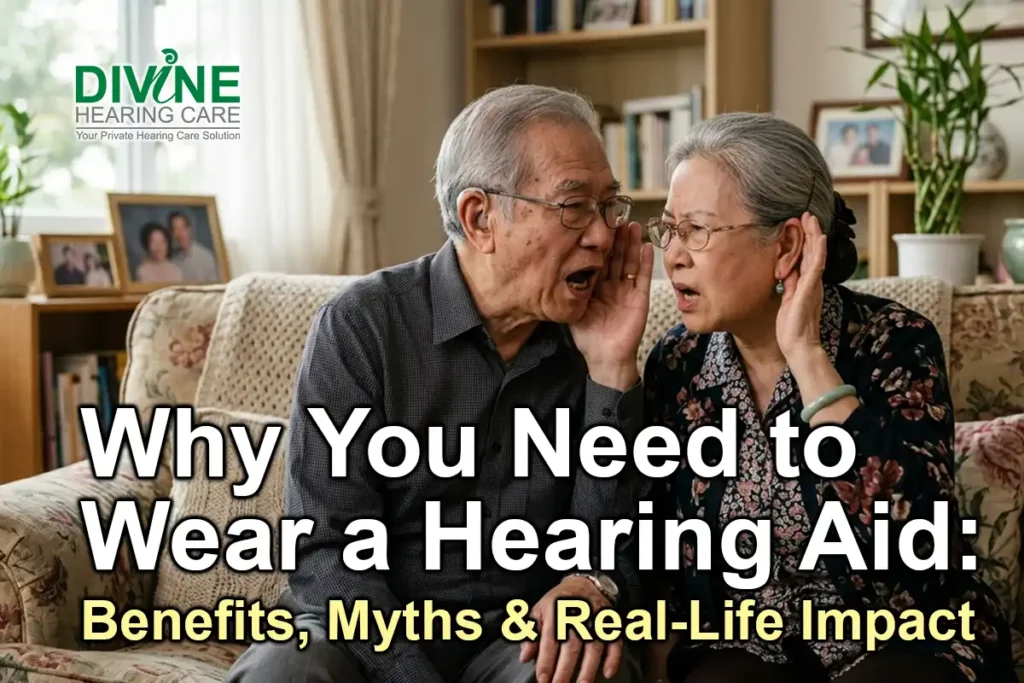
When hearing declines, it doesn’t just mean things are quieter.
It means:
- Conversations become harder
- Words become unclear
- Social interaction becomes tiring
Over time, many people:
- Withdraw from conversations
- Avoid social gatherings
- Feel isolated
A hearing aid helps restore not just sound — but connection.
Your Brain Needs Sound to Stay Active
Your brain processes sound constantly.
When hearing is reduced:
- The brain receives less stimulation
- Speech understanding declines
- Listening becomes harder over time
Wearing a hearing aid helps:
✔ Keep the brain engaged
✔ Maintain speech understandinging
✔ Reduce long-term decline
Relationships Improve When You Hear Better
Hearing loss often affects loved ones first.
Family members may feel:
- Frustrated from repeating
- Ignored or misunderstood
Better hearing leads to:
✔ Smoother conversations
✔ Stronger relationships
Real Case Study 1: From Silence to First Response
We once met a family who brought their sister for consultation.
For a long time, she rarely spoke and did not respond to family members.
The family believed she might have Autism Spectrum Disorder.
However, after a proper hearing assessment, we suspected that hearing loss could be a major factor.
We fitted her with a trial hearing aid.
Something remarkable happened.
For the first time, she responded to her sister’s voice.
It wasn’t perfect.
Because she had gone so long without hearing clearly, her speech ability was limited.
Her voice sounded like a young child just beginning to learn how to speak.
But that moment changed everything.
It showed that sometimes, what looks like a behavioural issue may actually be a hearing problem that was never addressed.
Listening Fatigue Is Real
Struggling to hear forces your brain to work harder.
This leads to:
- Mental fatigue
- Reduced focus
- Avoidance of conversation
A properly fitted hearing aid:
✔ Reduces effort
✔ Makes listening more natural
Real Case Study 2: The Cost of Waiting Too Long
We also worked with a gentleman in his 60s.
He had known about his hearing loss for over 10 years,
but refused to wear hearing aids.
Eventually, he agreed to try —
but did not wear them consistently.
Over time, his condition worsened.
After several years, he began showing signs of:
- Cognitive decline
- Emotional instability
- Behavioural changes that affected daily life
His wife became the primary caregiver, facing increasing stress and difficulty.
It’s important to clarify:
Hearing loss is not the direct cause of conditions like dementia or manic episodes.
However, research has shown that:
People with untreated hearing loss have a higher risk of cognitive decline and dementia.
This case reminds us:
Delaying hearing care doesn’t just affect the individual — it affects the entire family.
You Stay Aware of Your Environment
Hearing is also about safety.
Without proper hearing, you may miss:
- Doorbells
- Alarms
- Important alerts
A hearing aid helps you stay alert and confident.
The Earlier You Start, The Easier It Is
Many people wait too long.
But early use:
✔ Makes adaptation easier
✔ Improves long-term results
Delaying often makes adjustment harder.
Common Myths About Hearing Aids
“I can still manage.”
Hearing loss affects clarity, not just volume.
“I’m not old enough.”
Hearing loss can happen at any age.
Final Thoughts
WeWearing a hearing aid is not about fixing a problem —
it’s about protecting your life, your mind, and your relationships.
“You don’t just lose hearing — you slowly lose connection, response, and moments.”
Frequently Asked Questions (FAQ)
Because hearing loss affects clarity, not just volume.
Yes. It improves communication, confidence, and social interaction.
Yes. Early use leads to easier adaptation and better long-term results.
No. They support natural hearing, just like glasses support vision.
Yes. They reduce the effort needed to understand speech.